Iraq Oil Prices 2026: OPEC's Second Largest Producer Recovers
Iraq oil prices 2026: Analysis of Iraqi oil production recovery, infrastructure challenges, OPEC compliance, and energy sector development amid regional tensions.



Iraq holds the world's fifth-largest proven oil reserves, estimated at approximately 145 billion barrels, and ranks as OPEC's second-largest producer after Saudi Arabia. The country produces approximately 4-4.5 million barrels per day, with potential for significant growth. Decades of conflict—from the Iran-Iraq war through the Gulf War, sanctions, and post-2003 instability—hampered Iraq's oil industry. Recovery continues in 2026, with infrastructure investment and international company partnerships expanding capacity. Iraq's oil is critical to global supply, and the country's ability to maintain and expand production affects world markets.
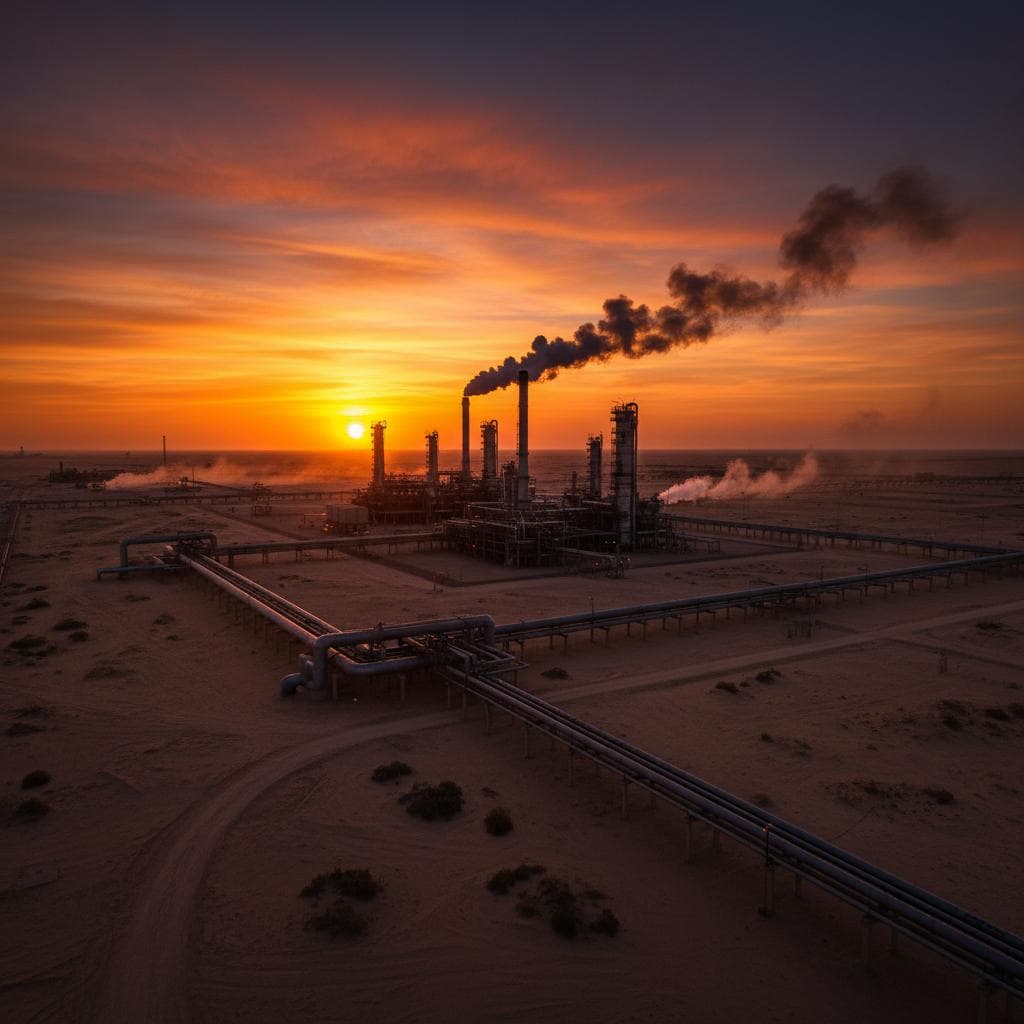
Iraq's oil infrastructure has suffered from decades of conflict and underinvestment. Pipelines, export terminals, and processing facilities require modernization. The country has multiple export routes: the southern terminals in the Persian Gulf handle most exports, while the northern pipeline through Turkey has been periodically disrupted. Water injection for reservoir management is critical but underdeveloped. Electricity shortages affect operations. Iraq has sought international investment to address these challenges, with some success, but bureaucracy, security concerns, and political instability have limited progress. Infrastructure constraints cap production growth regardless of reservoir potential.
Following the 2003 US-led invasion, Iraq opened its oil sector to international companies through technical service contracts. Major companies including BP, ExxonMobil, Eni, Lukoil, and Chinese national companies operate in Iraqi fields. These contracts pay companies fixed fees per barrel produced rather than sharing production, keeping ownership with Iraq. The model has attracted investment but created disputes over costs and payment delays. Security concerns have led some companies to reduce presence during periods of instability. The relationship between Iraq's oil ministry and international partners continues evolving as Iraq seeks to maximize the value of its resources.
Iraq's Kurdistan Region has developed its own oil industry, exporting crude through Turkey independent of Baghdad's control. This has created ongoing disputes between the Kurdish regional government and federal authorities over revenue sharing and constitutional authority. International companies signed production-sharing contracts directly with the Kurdistan Region, complicating relations with Baghdad. A 2022 arbitration ruling and subsequent developments have constrained Kurdistan's independent exports, creating uncertainty for companies operating there. Resolution of the Baghdad-Erbil oil dispute remains essential for Iraq's overall petroleum sector development.
Iraq has frequently exceeded its OPEC production quotas, citing need for oil revenue to fund reconstruction and government operations. The country has historically been one of the least compliant OPEC members, though it has improved in recent years. Iraq argues that its special circumstances—decades of conflict, reconstruction needs, and poverty—warrant higher quotas. OPEC+ has shown some flexibility for Iraq while insisting on overall group discipline. Production capacity exceeds current output, meaning Iraq could produce more if quotas allowed and infrastructure permitted.
Southern Iraq, particularly around Basra, is the heart of the country's oil industry. The giant fields of Rumaila, West Qurna, and Zubair account for most Iraqi production. Basra's export terminals in the Persian Gulf handle the vast majority of Iraq's crude exports. The region has been relatively stable compared to other parts of Iraq, enabling continued operations. However, Basra faces challenges including water scarcity, corruption, inadequate public services, and occasional protests. Investment in southern oil infrastructure continues, with expansions to export capacity and processing facilities.
Iraq occupies a uniquely difficult position in the US-Iran conflict, maintaining relations with both countries while hosting US forces and facing Iranian influence through proxy militias. Iran-backed groups in Iraq have attacked US forces and energy infrastructure during regional tensions. Iraq's government must balance American security cooperation against Iranian political pressure. The country's oil infrastructure is vulnerable to attack, as demonstrated by previous incidents. Iraq imports electricity and natural gas from Iran, creating energy dependence. The 2026 conflict tests Iraq's ability to navigate between competing powers while protecting its oil industry and national sovereignty.
Iraq's domestic energy consumption has grown rapidly, with electricity demand exceeding supply despite oil wealth. The country burns significant volumes of natural gas (associated with oil production) due to insufficient processing infrastructure, wasting resources and causing environmental damage. Iraq imports electricity and gas from Iran to meet demand. Power shortages have sparked protests, particularly in southern oil-producing regions. The government has prioritized capturing associated gas for power generation and reducing flaring, but progress has been slow. Developing domestic energy infrastructure is essential for both economic efficiency and political stability.
Iraq's oil industry has substantial growth potential, with reserves and geographic position supporting expanded production. Plans exist to increase capacity to 6-8 million barrels per day, though infrastructure and political constraints have limited progress. Investment in water injection, gas processing, and export infrastructure is essential. Resolution of disputes with the Kurdistan Region would unlock additional production. Political stability and security would improve the investment climate. However, global energy transition creates uncertainty about long-term demand. Iraq's low production costs ensure its oil will remain competitive, but the window for major capacity expansion may be limited.
Iraq remains one of the most important countries in global oil markets, with vast reserves and production potential constrained by decades of conflict and underinvestment. Recovery continues, but infrastructure challenges, political instability, and regional tensions create ongoing risks. Iraq's position between US and Iranian influence is particularly difficult in 2026, with the country vulnerable to spillover from their conflict. The government must balance competing pressures while developing an industry essential for national prosperity. Iraq's oil trajectory will significantly influence global supply for decades to come.