Diplomacy on Paper, War on the Ground: The Islamabad MoU and Israel’s Defiance in Lebanon
The Islamabad MoU and the Gap Between Diplomacy and Reality
On paper, the memorandum of understanding signed by US President Donald Trump and Iranian President Masoud Pezeshkian represented a potentially transformative moment for the Middle East. Brokered in Islamabad and formally endorsed by Pakistan, the MoU set out a framework for ending the US-Israeli military campaign against Iran, curbing Tehran’s nuclear ambitions, and reopening the Strait of Hormuz to unrestricted commercial shipping. The document was, by any diplomatic standard, an ambitious attempt to wind down one of the most dangerous confrontations the region has witnessed in decades.
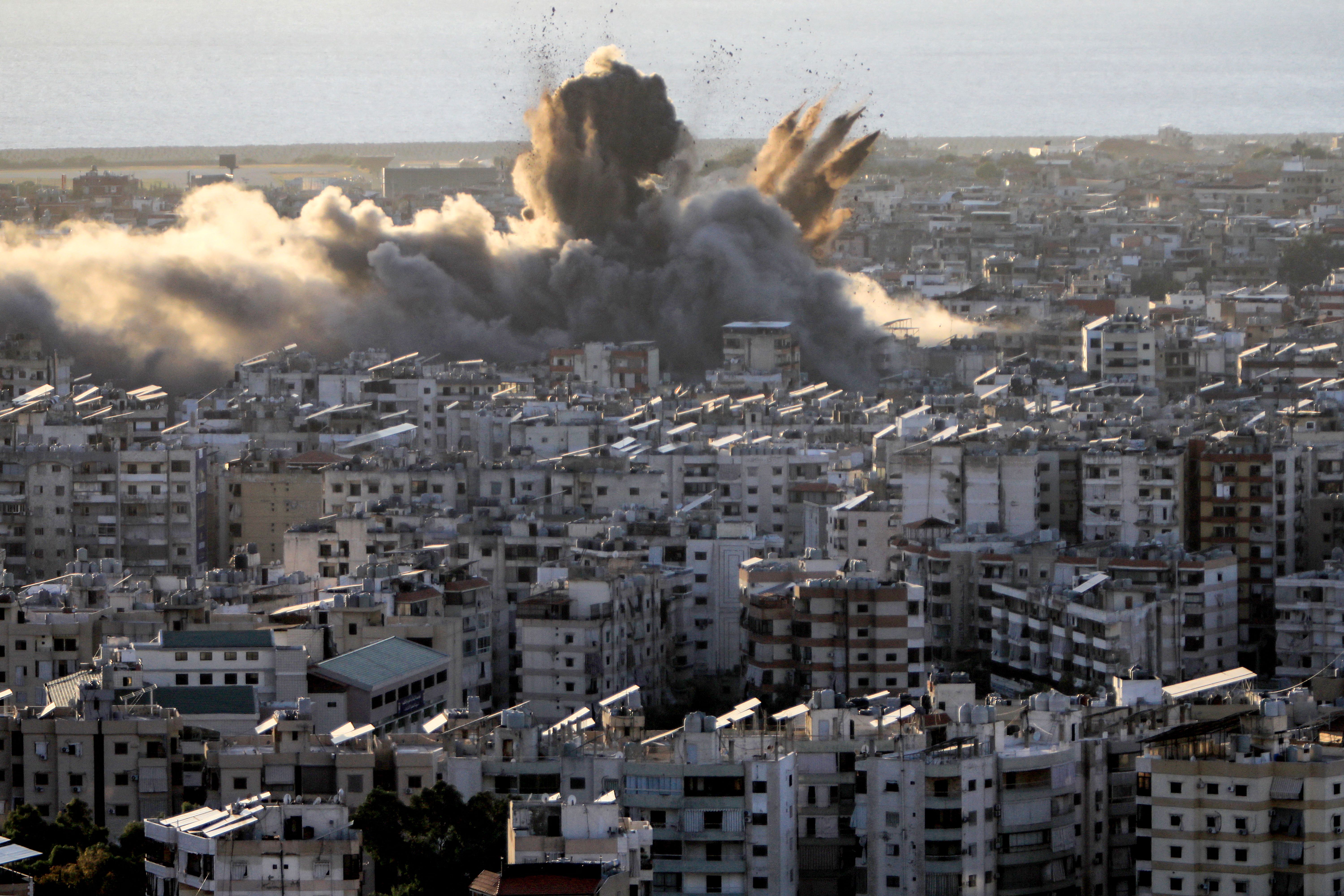
Yet within hours of the electronic signatures being affixed, the gap between the MoU’s aspirations and the reality on the ground became starkly apparent. Israeli forces killed at least one person in Lebanon as they pressed on with their invasion of the south, an operation that continued in direct contradiction to the agreement’s explicit provision calling for an end to Israel’s occupation of southern Lebanese territory. The dissonance between the diplomatic fanfare in Islamabad and the sound of ordnance falling on southern Lebanese villages captured, in microcosm, the central challenge facing any attempt to impose order on a region where multiple actors operate according to their own strategic imperatives.
This blog post examines the key dimensions of the unfolding crisis: the substance and limitations of the Islamabad MoU itself, Israel’s defiant continuation of military operations in Lebanon, the “stubborn” diplomatic posture of Prime Minister Benjamin Netanyahu’s government in its negotiations with Washington, the sharp internal Israeli debate over strategic direction, and Hezbollah’s recalibration of its negotiating posture in the wake of the deal. Taken together, these developments reveal a landscape in which diplomacy and violence are proceeding on parallel tracks, each undermining the other.
The Islamabad MoU: What the Deal Actually Says
The memorandum of understanding signed by Trump and Pezeshkian, facilitated by Pakistan and subsequently referred to as the “Islamabad MoU,” outlines three core provisions. First, Iran commits not to develop or purchase a nuclear weapon, a pledge that, if fully implemented and verified, would address one of the most persistent sources of anxiety for regional governments and the international community alike. Second, the agreement calls for an end to the war on all fronts, encompassing the ongoing hostilities between Israel and Iran, as well as the connected conflicts in Lebanon and Gaza. Third, it mandates the reopening of the Strait of Hormuz, the critical maritime chokepoint through which approximately one-fifth of the world’s oil supply transits daily.
Pakistan’s role as both host and guarantor of the agreement adds an interesting geopolitical dimension. Islamabad’s announcement that the MoU has formally taken effect signals that the document is not merely a symbolic gesture but is intended to carry legal and diplomatic weight. US officials corroborated Pakistan’s characterization, confirming that the three core provisions represent binding commitments rather than aspirational language. The involvement of Pakistan, a nation with deep ties to both the Gulf states and China, also suggests a broader diplomatic architecture in which multiple regional powers are being enlisted to support the agreement’s implementation.
However, the MoU’s language reveals the inherent fragility of the framework. The agreement requires Iran’s nuclear restraint and an end to hostilities on all fronts, but it does not specify the enforcement mechanisms, timelines, or verification protocols that would give these provisions teeth. The Strait of Hormuz provision, while economically significant, implicitly acknowledges that Iran has been exercising leverage over the waterway, and the agreement offers no detail on what guarantees would prevent Tehran from reversing course should the diplomatic process stall. These gaps are not mere technicalities; they represent the fault lines along which the entire agreement could fracture if any party decides that compliance no longer serves its interests.
Israel Defies the Deal: Continued Attacks and Civilian Casualties in Lebanon
Despite the Islamabad MoU’s explicit inclusion of an end to Israel’s occupation of southern Lebanon as a core provision, Israeli military operations have continued unabated. Israeli forces killed at least one person in Lebanon during renewed strikes in the south, underscoring the gulf between the diplomatic commitments made in Islamabad and the operational reality confronting civilians on the ground. The fatality, while representing only a single confirmed death, carries outsized symbolic weight: it demonstrates that the ceasefire provisions of the MoU are, at this stage, entirely aspirational as far as Israel is concerned.
The continued military activity in southern Lebanon is not a case of isolated incidents or misunderstandings along a fluid front line. It reflects a deliberate Israeli policy decision to maintain pressure on Hezbollah and to secure territorial objectives that Israel’s leadership considers essential to its national security. The fact that these operations persisted even after the signing ceremony in Islamabad, and even after the public endorsement of the agreement by both Washington and Tehran, signals that Israel’s calculus is driven by factors that the MoU’s framers either failed to anticipate or chose to override in the interests of achieving a diplomatic breakthrough.
For the civilian population of southern Lebanon, the gap between the agreement’s promises and the continuation of military operations is not an abstract diplomatic concern but an immediate and existential reality. Families that had hoped the Islamabad MoU would bring an end to the displacement, destruction, and fear that have characterized months of Israeli bombardment are instead facing a continuation of the same conditions, with no clear timeline for relief. The humanitarian implications are severe, and the erosion of civilian confidence in the diplomatic process risks creating a dangerous vacuum in which extremist narratives about the futility of negotiation gain traction.
Netanyahu’s “Stubborn” Stand: Israel Refuses to Withdraw
Behind the scenes, Israel’s diplomatic posture has been characterized by what US officials have described, with unusual candor, as “stubborn negotiations.” According to a senior official close to Prime Minister Netanyahu who spoke to Reuters on condition of anonymity, Israel has no intention of backing down on its position regarding the continued deployment of its troops in southern Lebanon. The use of the word “stubborn” by American interlocutors is itself telling; it suggests a level of frustration in Washington that has moved beyond private diplomatic channels and into the vocabulary of public description.
"Israel has no intention of backing down on its position regarding its occupation of southern Lebanon."
— Senior Israeli official close to Netanyahu (via Reuters)
Netanyahu’s intransigence on Lebanon is rooted in a strategic assessment that prioritizes territorial security above diplomatic harmony. Israel’s military leadership has long argued that the occupation of a buffer zone in southern Lebanon is essential to preventing Hezbollah from re-establishing the rocket arsenal and tunnel network that posed such a severe threat to northern Israeli communities during the recent conflict. From this perspective, any withdrawal, regardless of what a US-Iran agreement might stipulate, would represent an unacceptable security risk that could embolden Hezbollah and invite renewed attacks on Israeli soil.
The political dimension of Netanyahu’s calculus is equally important. His coalition government depends on the support of right-wing and religious parties that view any territorial concession as tantamount to capitulation. The prime minister’s domestic political survival is intimately tied to his ability to project strength and resolve, particularly on national security matters. Backing down on Lebanon in response to American pressure, especially in the context of an agreement that also constrains Iran’s nuclear program—a program that Israel has identified as an existential threat—would expose Netanyahu to devastating criticism from his own political base and could trigger the collapse of his government.
Israeli Domestic Fractures: Gallant’s Warning and Saada’s Battle Cry
Perhaps the most revealing dimension of the current crisis is the sharp internal debate within Israel’s own political and security establishment. Two prominent Israeli figures offered strikingly different assessments of the situation, and the contrast between their positions illuminates the depth of the strategic disagreement that the Islamabad MoU has exposed within Israel’s ruling circles.
Yoav Gallant: A Scathing Indictment of Israeli Strategy
Yoav Gallant, Israel’s former defence minister and a figure with deep credibility within the country’s security establishment, delivered a remarkably blunt assessment of the government’s strategic record. Gallant argued that Iran has retained its nuclear capabilities in part because of poor decision-making by Israel itself, a statement that goes far beyond the kind of retrospective criticism typically offered by former officials and instead constitutes an indictment of the Netanyahu government’s entire strategic approach to the Iranian nuclear threat.
"Unfortunately, Iran has held onto its nuclear capabilities because of our own strategic miscalculations, and that is a serious danger. This deal has left us in a very bad position. Israel’s strategic goal was solely to halt the nuclear programme, and within that framework we have squandered opportunities that won’t come around again for a generation or two."
— Yoav Gallant, Former Israeli Defence Minister
Gallant’s warning about “squandered opportunities” that will not return “for a generation or two” is particularly striking. It suggests that within Israel’s own security apparatus, there is a recognition that the Netanyahu government’s approach to the Iranian nuclear question has been counterproductive, and that the Islamabad MoU—which constrains Iran but leaves Israel’s regional military posture significantly weakened—represents the culmination of years of strategic errors. For a former defence minister to publicly characterize his own country’s strategic posture as having been reduced to a “very bad position” is extraordinary and reflects a level of internal alarm that should not be underestimated.
Moshe Saada: The Call for Maximum Force
In stark contrast to Gallant’s sober reflection, Moshe Saada, a lawmaker from Netanyahu’s own Likud party, delivered an impassioned call for military escalation. Saada urged the prime minister to defy American pressure entirely, telling Trump directly that Israel would not comply with demands to withdraw from Lebanon. His rhetoric was stark: he described any withdrawal as an “existential threat” and called for Israel to “strike Lebanon everywhere, around the clock, with maximum force and with no proportionality.”
"Prime Minister Netanyahu needs to tell Trump ‘enough.’ I am bound to defend Israelis, and withdrawing from Lebanon right now poses an existential threat to Israel. Duty demands that we strike Lebanon everywhere, around the clock, with maximum force and with no proportionality."
— Moshe Saada, Likud Party Lawmaker
Saada’s statement is significant not because his views are necessarily representative of mainstream Israeli strategic thinking, but because they illustrate the extreme pressure that Netanyahu faces from within his own coalition. The call for military action “with no proportionality” is, in effect, an endorsement of unlimited warfare, a position that would place Israel in direct and irreconcilable conflict with international humanitarian law and with the expectations of virtually every member of the international community, including the United States. That such a position can be voiced openly by a sitting member of the ruling party speaks to the depth of the hawkish sentiment within Israel’s political system and the constraints it imposes on any leader seeking a diplomatic off-ramp.
Hezbollah’s Strategic Calculus: A “Big Victory” and Mutual Security
While Israel’s political establishment grapples with internal divisions over the Islamabad MoU, Hezbollah’s leadership has moved swiftly to frame the agreement as a major strategic achievement. Naim Qassem, the group’s chief, hailed the deal as a “big victory” and articulated a negotiating framework for Lebanon’s engagements with Israel that is notably narrow in scope. According to Qassem, Lebanon’s negotiations with Israel should be limited to “mutual security” and should not encompass the disarmament of Hezbollah, a position that effectively removes the most contentious element of the Lebanon-Israel dialogue from the table before talks have even begun.
"This agreement is a big victory. Lebanon’s negotiations with Israel should be limited to mutual security and not the armed group’s disarmament."
— Naim Qassem, Hezbollah Chief
Qassem’s framing is strategically astute. By declaring the MoU a victory, Hezbollah seeks to claim ownership of the diplomatic outcome and to position itself as a driving force behind the de-escalation, regardless of the actual extent of its influence over the negotiations in Islamabad. The insistence that future Lebanon-Israel talks should address only “mutual security” serves a dual purpose: it signals Hezbollah’s willingness to engage on practical issues such as border arrangements and the prevention of future hostilities, while simultaneously drawing a hard line around the one issue—its armed capabilities—that Israel and the United States have consistently identified as the primary obstacle to a durable peace.
The practical implications of Qassem’s position are significant. If Lebanon enters negotiations with Israel on the basis of “mutual security” while Hezbollah’s disarmament is excluded from the agenda, the resulting arrangement would likely institutionalize Hezbollah’s status as a permanent armed actor in Lebanese politics. For Israel, this would represent an unacceptable outcome, as it would leave Hezbollah’s military infrastructure intact and capable of posing a renewed threat to northern Israel at any time. For the United States, which has invested considerable diplomatic capital in the Islamabad MoU, Hezbollah’s stance creates a potential deadlock that could undermine the agreement’s long-term viability.
The Road Ahead: Parallel Tracks, Divergent Destinies
The Islamabad MoU was born of a recognition, shared by both Washington and Tehran, that the trajectory of the US-Israel-Iran conflict was heading toward an outcome that would
be catastrophic for all parties. The agreement’s three pillars—nuclear restraint, an end to hostilities, and the reopening of the Strait of Hormuz—represent the minimum requirements for regional stability, and their inclusion in a signed document reflects a genuine, if fragile, alignment of interests between the two principal adversaries.
But the events of the past hours have demonstrated, with brutal clarity, that agreements between heads of state do not automatically translate into changes in behavior on the ground. Israel’s continued military operations in Lebanon, its refusal to withdraw from occupied territory, and the deep internal divisions within its own political and security establishment all point to a country that is not yet prepared to translate diplomatic abstraction into operational reality. The Netanyahu government’s “stubborn” negotiating posture, coupled with the maximalist demands of figures like Moshe Saada, suggests that Israel’s approach to the post-MoU landscape will be defined by resistance rather than accommodation.
At the same time, the voices of dissent within Israel’s own security establishment, most notably Yoav Gallant’s scathing assessment of the government’s strategic record, offer a reminder that the current trajectory is not without its critics. Hezbollah’s attempt to shape the narrative and the parameters of future negotiations adds another layer of complexity, as does the broader question of whether the MoU’s enforcement mechanisms are robust enough to withstand the inevitable pressures that will be applied by actors who view the agreement as contrary to their interests.
The coming days and weeks will determine whether the Islamabad MoU becomes the foundation of a genuine peace process or merely another diplomatic document that failed to survive contact with reality. The stakes are immense, extending far beyond the borders of the Middle East to encompass global energy security, nuclear non-proliferation, and the credibility of the international diplomatic system itself. For now, the only certainty is that the gap between what was agreed in Islamabad and what is happening on the ground in southern Lebanon remains wide, dangerous, and deeply unresolved.