The Iran-Israel Ceasefire Crisis: A Fragile Peace Under Siege
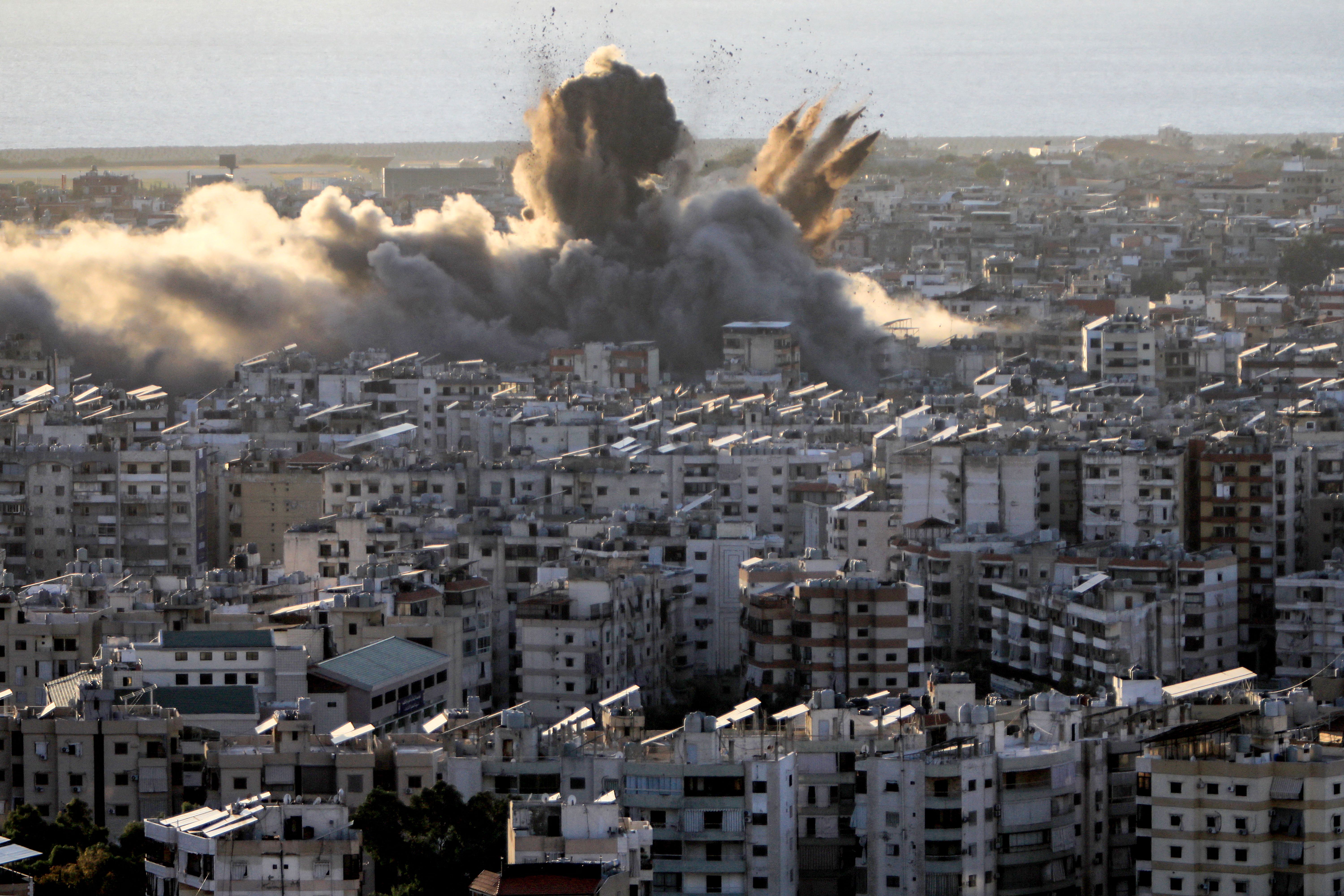
When the United States and Iran announced a landmark diplomatic agreement on Sunday, there was a fleeting sense of cautious optimism across the Middle East. The deal, described by Washington as a framework for de-escalation, was expected to calm the simmering tensions between Israel and its adversaries in the region. Yet within hours of the announcement, the reality on the ground told a sharply different story. Far from ushering in a new era of stability, the agreement appears to have done little to restrain the cycle of violence in southern Lebanon, and may have even accelerated the rhetorical escalation between the key players involved.
The situation underscores a deeply uncomfortable truth for diplomats and policymakers alike: that a bilateral agreement between two powers, no matter how significant, cannot by itself impose order on a conflict that involves multiple state and non-state actors with their own agendas, red lines, and strategic calculations. Iran, Israel, the United States, and Hezbollah are all operating within their own frameworks of perceived self-interest, and the convergence of these competing interests is creating a volatile environment in which miscalculation could have devastating consequences.
This blog post examines the four major developments that have emerged in the immediate aftermath of the US-Iran deal: Iran's warning of a "harsh response" to continued Israeli operations in Lebanon, President Trump's public rebuke of Benjamin Netanyahu, the Israeli Prime Minister's defiant refusal to withdraw troops from southern Lebanon, and Vice President JD Vance's indications about the diplomatic parameters of the 60-day negotiating window. Together, these threads paint a picture of a region teetering between fragile diplomacy and dangerous escalation.
Iran’s Warning: 84 Violations and Counting
Perhaps the most alarming development in the aftermath of the US-Iran agreement was the stark statement issued by Iran's military. According to Iran's army, Israel has violated the ceasefire in southern Lebanon no fewer than 84 times since the deal was announced on Sunday. The specificity of this number is itself a deliberate communications strategy, intended to signal both precision in monitoring and a growing reservoir of patience that is rapidly being depleted. Iran's military statement warned that the aggressor "should expect a harsh response" if the attacks continue, language that falls squarely within the vocabulary of military deterrence while leaving the exact nature of that response deliberately ambiguous.
"The aggressor should expect a harsh response if these attacks continue. We have documented 84 violations of the ceasefire since the US-Iran deal was announced."
-- Statement from Iran's Army
The Iran-Israel Ceasefire Crisis
The figure of 84 violations is significant for several reasons. First, it suggests that Israeli military operations in southern Lebanon did not pause or even slow down in the wake of the diplomatic announcement. This is not merely a case of sporadic skirmishes or misunderstandings along the border; rather, it implies a sustained pattern of military activity that runs counter to the spirit, if not the letter, of the ceasefire framework. Second, the public enumeration of violations serves as a form of pressure on both Israel and the United States, reminding Washington that its diplomatic partner in Tehran is watching closely and that continued Israeli operations will strain the agreement before it has had any meaningful opportunity to take root.
From Iran's perspective, the calculus is multifaceted. On one hand, Tehran has committed to a diplomatic process with Washington, a decision that carries its own domestic political risks given the hardline factions within Iran that view any engagement with the United States with deep suspicion. On the other hand, Iran cannot afford to be seen as passive in the face of continued Israeli aggression, particularly when that aggression affects Lebanon, a country where Iran has invested considerable political and military capital through its support for Hezbollah. The "harsh response" warning is therefore aimed at multiple audiences simultaneously: it reassures Iran's domestic base and regional allies of its resolve, while simultaneously putting pressure on Washington to rein in its Israeli ally.
Trump’s Rebuke: A Growing Rift Between Washington and Tel Aviv
In a development that would have been nearly unthinkable in previous administrations, President Donald Trump publicly criticized Israeli Prime Minister Benjamin Netanyahu over Israel's conduct in southern Lebanon. Trump stated that Netanyahu "has to be more responsible" and added pointedly, "I'm not happy" with Israel's invasion and its handling of Hezbollah. The remarks, delivered in a public forum rather than through the private diplomatic channels typically used for such communications, represent a significant escalation in the rhetorical friction between the two leaders.
"Netanyahu has to be more responsible in Lebanon. I'm not happy with Israel's invasion and handling of Hezbollah."
-- President Donald Trump
The public nature of Trump's criticism is itself newsworthy. While US-Israeli disagreements have occurred throughout the history of the alliance, they have historically been managed behind closed doors, with both sides careful to project an image of unity in public. Trump's willingness to air his displeasure openly suggests either a calculated diplomatic strategy or a genuine frustration with Netanyahu's refusal to align Israeli military operations with the broader goals of US foreign policy in the region. Either way, the effect is the same: it creates a visible crack in the US-Israeli relationship that other actors in the region, including Iran, will immediately seek to exploit for their own advantage.
The Iran-Israel Ceasefire Crisis
The timing of Trump's remarks is also significant. Coming so soon after the US-Iran deal, the rebuke can be read as an attempt by Washington to demonstrate evenhandedness, showing Tehran that the United States is prepared to pressure its own allies when they act in ways that undermine diplomatic progress. Whether this strategy will succeed in building goodwill with Iran, or whether it will simply embolden Netanyahu to double down on his current course of action, remains to be seen. What is clear is that the traditional dynamic of unquestioning US support for Israeli military operations has, at least temporarily, been altered in a way that introduces new uncertainties into an already complex strategic landscape.
Netanyahu’s Defiance: Israel’s Unwavering Stance on Southern Lebanon
If Trump's comments were intended to pressure Netanyahu into changing course, they appear to have had the opposite effect. In a direct response that underscored the depth of the disagreement between the two leaders, Netanyahu declared unequivocally that Israeli troops will continue to occupy southern Lebanon despite the US-Iran agreement. The statement was not merely a dismissal of American diplomatic preferences; it was a forceful assertion of Israeli strategic autonomy and a signal that Israel's security calculations will not be subordinated to the objectives of US-Iran negotiations.
"Israeli troops will continue to occupy southern Lebanon despite the US-Iran agreement. The security of our northern communities is not negotiable."
-- Prime Minister Benjamin Netanyahu
Netanyahu's position reflects a confluence of strategic and domestic political considerations. From a security perspective, Israel views the presence of its military in southern Lebanon as a buffer against Hezbollah, the Iran-backed militant group that has been a persistent threat to Israel's northern border communities. The occupation is seen within Israel's security establishment as a necessary measure to degrade Hezbollah's capabilities and prevent the group from re-establishing the military infrastructure that existed prior to recent Israeli operations. From Netanyahu's personal political standpoint, any perception of weakness in the face of security threats could be devastating to his fragile coalition government, which relies heavily on right-wing and religious parties that take an uncompromising stance on national security.
The defiance also raises fundamental questions about the limits of American influence over Israeli policy. For decades, the United States has been Israel's most important diplomatic and military partner, providing billions of dollars in annual aid and wielding its veto power at the United Nations Security Council to shield Israel from international censure. Yet Netanyahu's willingness to publicly disregard US preferences at such a critical diplomatic juncture suggests that the Israeli leadership has concluded that the benefits of maintaining its current military posture in Lebanon outweigh the costs of alienating Washington, at
The Iran-Israel Ceasefire Crisis
least in the short term. This calculation could prove risky if it leads to a sustained crisis in US-Israeli relations, but for now, Netanyahu appears determined to bet on the resilience of the alliance.
Vance’s Diplomatic Signals: Nuclear Inspectors and the Strait of Hormuz
While Trump and Netanyahu exchanged barbs, and Iran issued military warnings, US Vice President JD Vance offered a different perspective on the emerging diplomatic framework. Vance stated that he expects UN nuclear inspectors to return to Iran as part of the implementation of the 60-day negotiating window, a development that would represent a significant step toward transparency in Iran's nuclear program. He also indicated that there would be "no tolls" in the Strait of Hormuz during the 60-day talks with Tehran, a reassurance aimed at calming global oil markets and signaling that neither side intends to weaponize one of the world's most critical shipping chokepoints during the negotiating period.
"I expect UN nuclear inspectors to return to Iran, and there will be no tolls in the Strait of Hormuz during the 60 days of talks with Tehran."
-- US Vice President JD Vance
The return of UN nuclear inspectors would be a tangible, verifiable measure of Iranian compliance with the agreement's terms. Since the collapse of the previous nuclear framework, Iran has progressively reduced its cooperation with international monitoring bodies, raising concerns about the opacity of its nuclear activities and the potential for a rapid breakout capability. The resumption of inspections would not only provide the international community with greater visibility into Iran's nuclear facilities but would also serve as a confidence-building measure that could help sustain the diplomatic momentum generated by the initial agreement.
Vance's assurance regarding the Strait of Hormuz is equally significant from an economic perspective. The strait, through which roughly one-fifth of the world's oil supply passes, has been a flashpoint in previous periods of tension between Iran and the West. Any disruption to shipping through the waterway would have immediate and severe consequences for global energy prices, with ripple effects across financial markets and consumer economies worldwide. By explicitly ruling out any interference with shipping during the talks, Vance is attempting to separate the diplomatic process from the economic anxiety that has historically accompanied Middle East conflicts, though whether this assurance will hold in the event of further escalation between Israel and Iran remains an open question.
What Comes Next: Scenarios for Escalation or De-escalation
The confluence of these four developments creates a complex and deeply uncertain strategic environment. To make sense of what may lie ahead, it is useful to consider three broad
The Iran-Israel Ceasefire Crisis
scenarios, each with distinct implications for regional stability, global security, and the international economy.
Scenario 1: Diplomatic Breakthrough
In the most optimistic scenario, the 60-day negotiating window produces meaningful progress on key issues, including Iran's nuclear program, regional security arrangements, and the normalization of relations between Tehran and its neighbors. Iran's restraint in the face of continued Israeli operations in Lebanon is rewarded with tangible diplomatic concessions from the United States, while Israel, under pressure from Washington, gradually reduces its military footprint in southern Lebanon. UN nuclear inspectors return to Iranian facilities, and the Strait of Hormuz remains open and unimpeded throughout the process. While this scenario is achievable in theory, it requires a degree of alignment between the interests of all parties that has been conspicuously absent in the current environment.
Scenario 2: Continued Stalemate
A more likely scenario is one of continued stalemate, in which neither side makes sufficient concessions to break the deadlock, but neither side takes the decisive steps that would trigger a full-scale escalation. Israel maintains its military presence in southern Lebanon, Iran issues periodic warnings but ultimately exercises restraint, and the US-Iran talks produce incremental progress that falls short of a comprehensive agreement. This is arguably the most probable outcome given the current dynamics, but it is also the most unstable, as a prolonged stalemate creates multiple opportunities for miscalculation, particularly along the Israel-Lebanon border where Hezbollah maintains a significant military capability.
Scenario 3: Full-Scale Escalation
The darkest scenario involves a direct military confrontation between Israel and Iran, triggered either by an Israeli operation in Lebanon that crosses one of Iran's stated red lines or by an Iranian response that Israel interprets as an act of war. In this scenario, the diplomatic framework collapses entirely, the Strait of Hormuz becomes a theater of conflict, global oil prices spike to unprecedented levels, and the United States is drawn into a regional war that it has spent years trying to avoid. The human and economic costs of such an outcome would be catastrophic, and the reverberations would be felt far beyond the borders of the Middle East, affecting European security, Asian energy supplies, and the global economic recovery.
The next 60 days will be critical in determining which of these scenarios materializes. The US-Iran agreement has created a narrow window of diplomatic opportunity, but the continued volatility in southern Lebanon, the public disagreements between Washington and Tel Aviv, and the underlying mistrust between all parties mean that this window could close as quickly as it opened. What is certain is that the stakes could not be higher, and the world will be watching closely as events unfold.