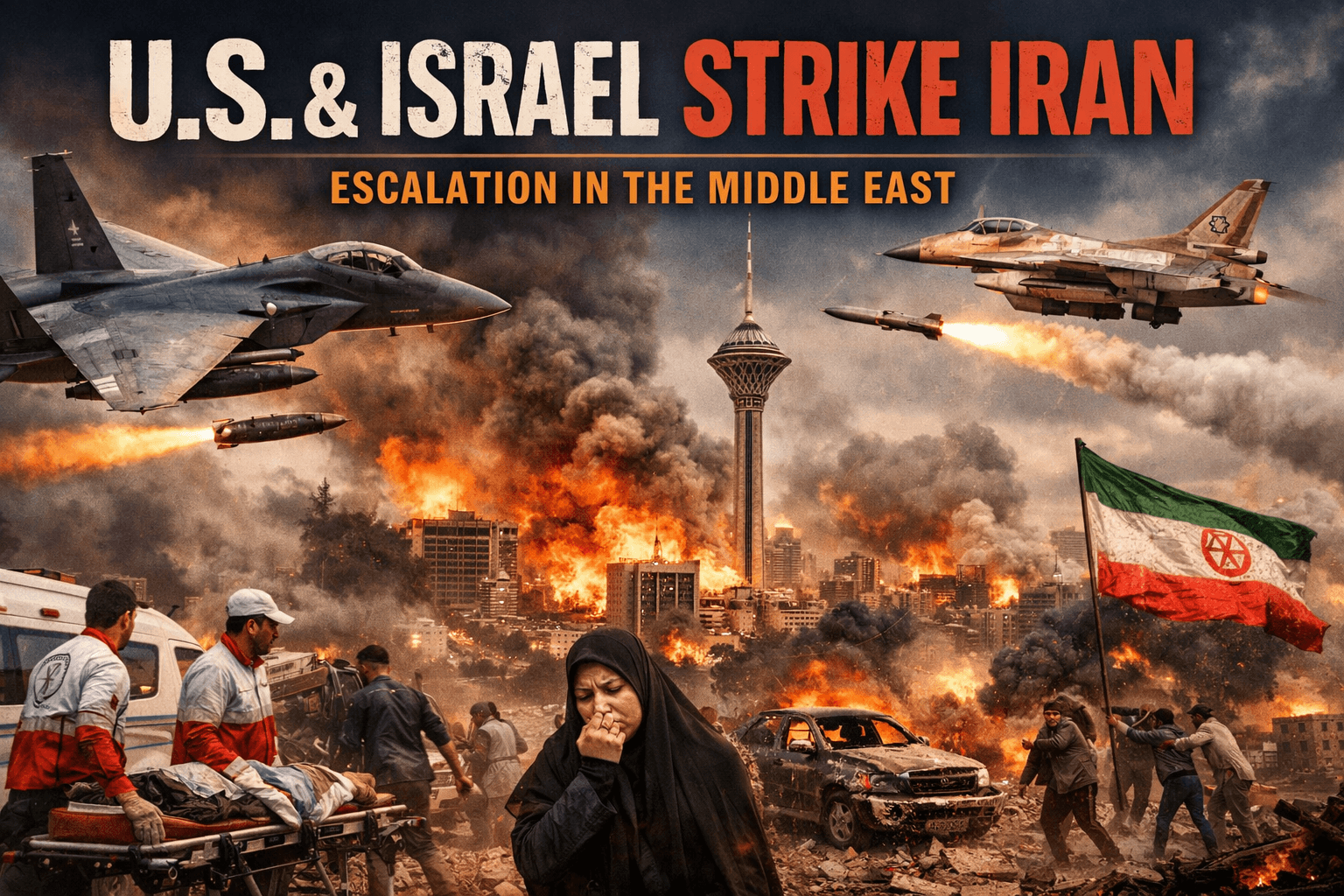
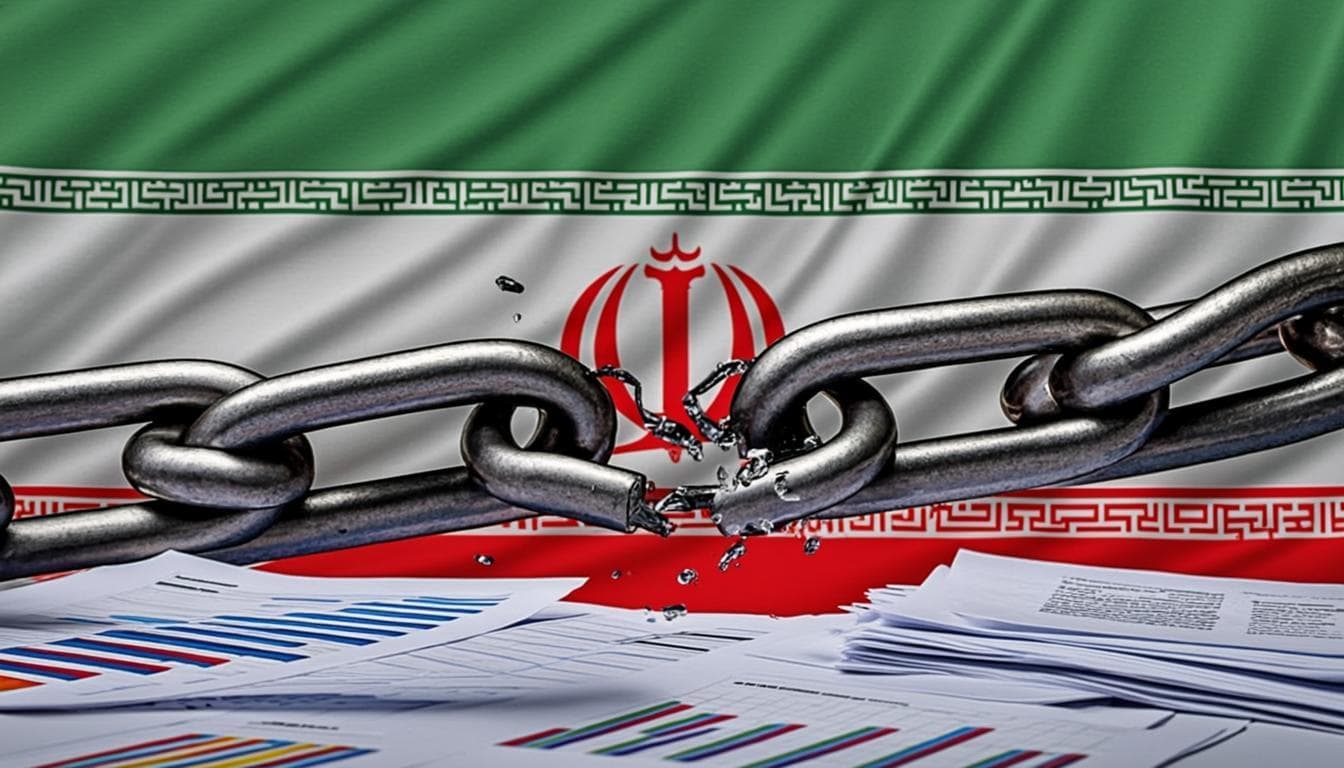
One month after the United States and Israel launched coordinated military strikes against Iran on 28 February 2026, the world finds itself grappling with a crisis that has rapidly evolved from a regional military confrontation into a systemic global shock. The closure of the Strait of Hormuz by Iran, the subsequent surge in oil prices past $120 per barrel, and the cascading disruptions to energy markets, supply chains, and financial systems have forced governments and institutions worldwide to reassess their assumptions about economic resilience, energy security, and geopolitical stability.
A World on Edge
One month after the United States and Israel launched coordinated military strikes against Iran on 28 February 2026, the world finds itself grappling with a crisis that has rapidly evolved from a regional military confrontation into a systemic global shock. The closure of the Strait of Hormuz by Iran, the subsequent surge in oil prices past $120 per barrel, and the cascading disruptions to energy markets, supply chains, and financial systems have forced governments and institutions worldwide to reassess their assumptions about economic resilience, energy security, and geopolitical stability.
In a timely and incisive episode of the Independent Thinking podcast from Chatham House, host Bronwen Maddox convenes two leading experts — David Lubin, senior research fellow in the Global Economy and Finance Programme, and Grégoire Roos, director of the Europe and Russia and Eurasia programmes — to examine whether the Iran war represents a regional shock that will eventually be absorbed, or a genuine global crisis that will reshape the international order for years to come. Their analysis draws on decades of expertise in macroeconomic policy, energy markets, and European security to provide a nuanced assessment of where the world now stands, and where it might be heading.
This blog post explores the key themes discussed in the podcast, contextualising them within the broader landscape of expert analysis and real-time developments that have unfolded since the conflict began. From oil price shocks and inflation to diplomatic manoeuvring and great-power competition, the questions raised by this crisis demand urgent attention from policymakers, businesses, and citizens alike.
The Strait of Hormuz: Chokepoint of the Global Economy
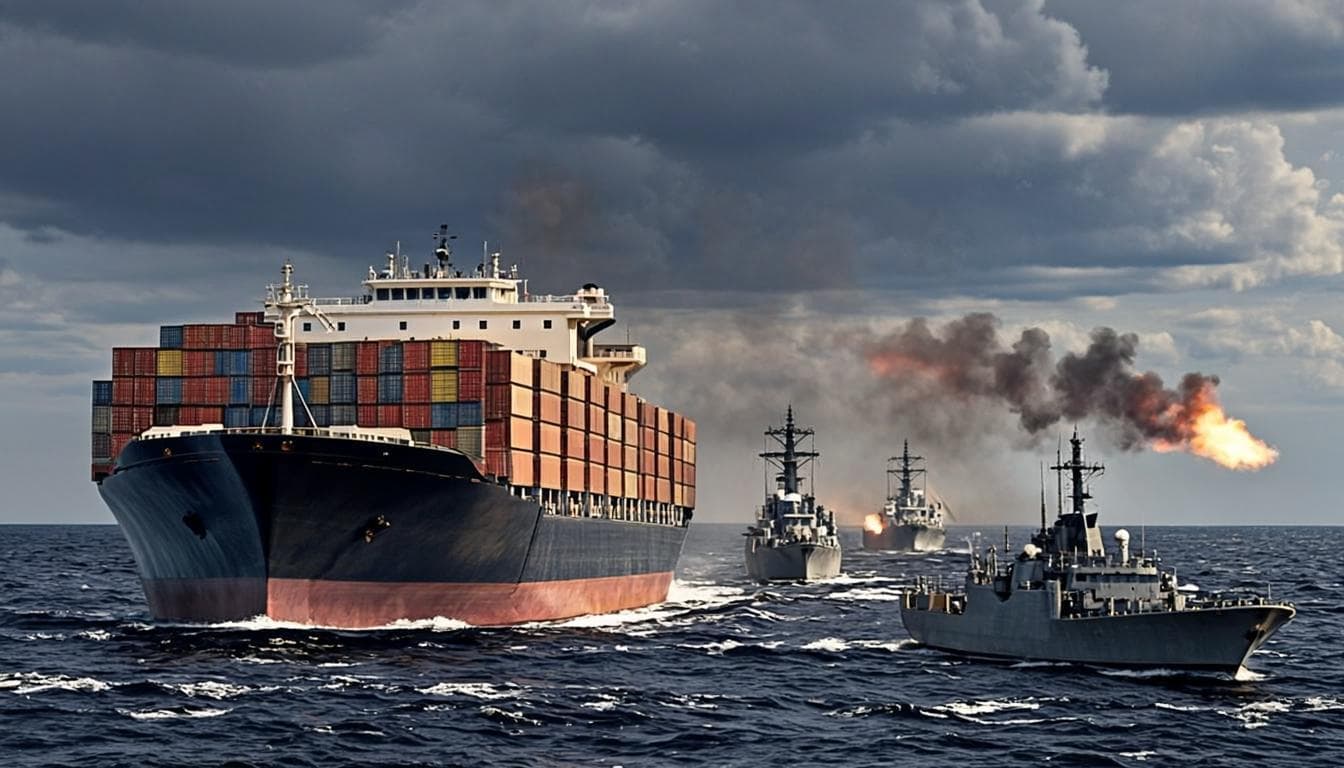
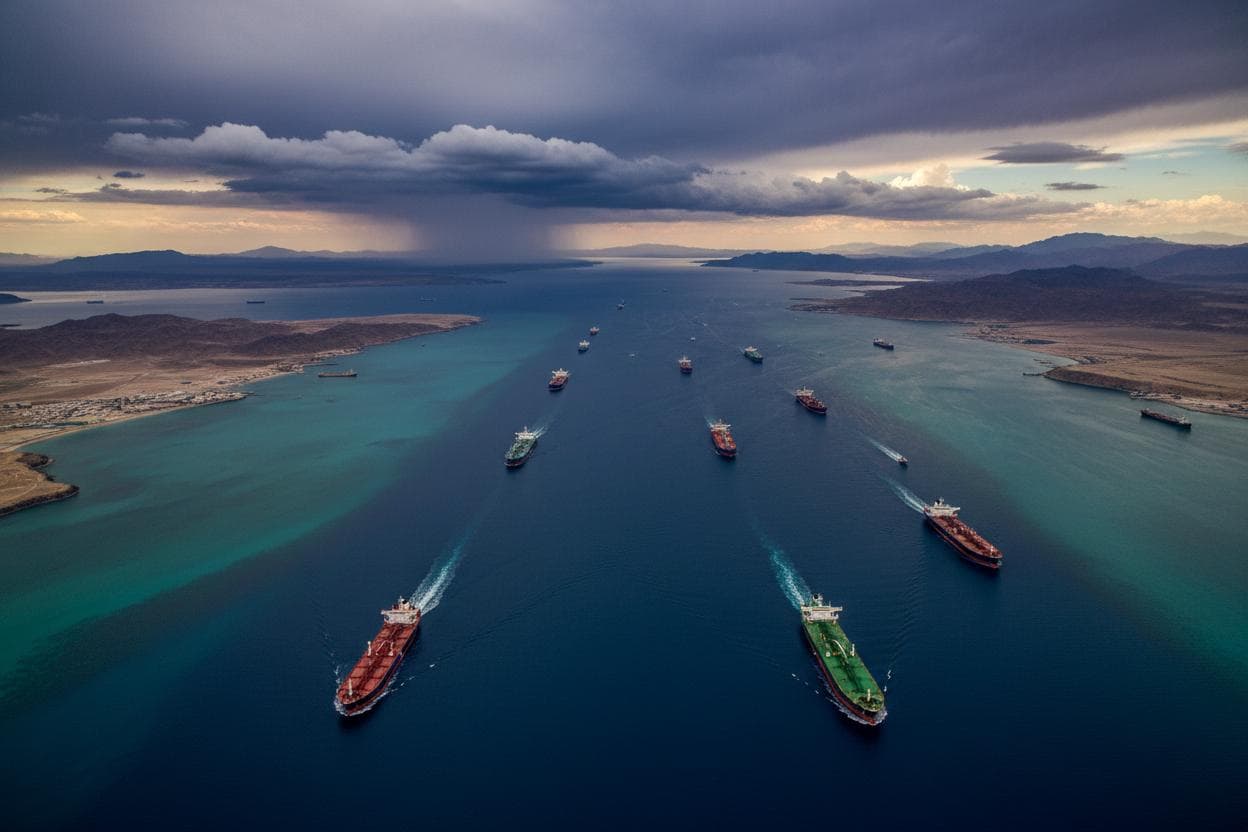
The Strait of Hormuz has long been recognised as the most critical maritime chokepoint for world energy trade. Approximately 20 percent of global oil consumption and nearly 20 percent of liquefied natural gas (LNG) trade pass through this narrow waterway between Oman and Iran each day. When Iran moved to block shipping traffic through the Strait following the outbreak of hostilities, the consequences were immediate and dramatic.
Brent crude, the international oil benchmark, surged from approximately $71 per barrel on 27 February to over $82 within days, and continued its upward trajectory to peak above $120 per barrel by late March and April 2026. This represented the largest disruption to global oil markets in modern history, surpassing even the supply shocks of the 1970s in terms of the absolute volume of petroleum affected. According to the International Monetary Fund, the de facto closure of the Strait and damage to regional energy infrastructure produced the largest disruption to the global oil market since records began, with roughly one-fifth of global oil production and a comparable share of LNG trade directly impacted.
The Asian economies have borne the brunt of the initial disruption. Data from the London School of Economics indicates that in 2025, around 87 percent of oil and 86 percent of LNG passing through the Strait of Hormuz were destined for Asian markets. China, Japan, South Korea, and India are all heavily dependent on Gulf energy imports, and the sudden constriction of supply has forced them to scramble for alternative sources at significantly higher costs. India, which imports approximately 80 percent of its crude oil, has been particularly exposed, with refineries struggling to secure adequate feedstock and the government compelled to draw down strategic petroleum reserves.
“The unprecedented US and Israeli coordinated attack on Iran has resulted in the largest energy supply disruption in history.” Goldman Sachs Research, March 2026
For European nations, the impact has been somewhat delayed but no less severe. The continent’s reliance on Gulf LNG imports, which increased substantially after the cutoff of Russian pipeline gas following the invasion of Ukraine, means that the Hormuz blockade compounds an already precarious energy situation. European governments have been forced to reconsider their energy diversification strategies and, as Carbon Brief has reported, the EU has readied crisis response measures that include breaking the link between gas and electricity prices a structural reform that had previously been considered politically impossible.
Echoes of 1973: A New Oil Shock or Something Different?
The most immediate historical parallel drawn by analysts and by Lubin in the podcast is the 1973 oil crisis, when OPEC’s embargo quadrupled oil prices and triggered stagflation across the Western world. The comparison is instructive, but the differences are as revealing as the similarities.
Parallels with the 1970s
Like the 1973 crisis, the Iran war has produced a sudden, politically driven supply shock that has sent oil prices soaring and rekindled inflationary pressures across the global economy. The ADB’s research estimates a 13 percent reduction in global oil supply actively driving inflation higher and slowing GDP growth, while Friends of Europe projects the energy crisis could cut 1 percent from average GDP growth and add 2–3 percentage points to inflation in the most exposed economies. These dynamics rising prices, slowing growth, and the spectre of stagflation are eerily reminiscent of the macroeconomic environment of the mid-1970s.
The political dimension also echoes the earlier crisis. In 1973, the oil embargo was a deliberate weaponisation of energy supply for geopolitical purposes. In 2026, Iran’s closure of the Strait of Hormuz serves a similar function using control over a critical trade route as leverage against its adversaries. The weaponisation of economic interdependence, a
hallmark of the 1973 crisis, has returned with even greater force.
Critical Differences
However, as the LSE’s analysis has highlighted, the 2026 shock differs from its predecessor in several important respects. First, the world economy in 2026 is significantly less reliant on fossil fuels than it was in 1973. Renewable energy sources now account for a substantially larger share of electricity generation, and energy efficiency improvements have reduced the oil intensity of GDP in most developed economies. As a result, the oil price rise has been limited to 40–50 percent, compared with the quadrupling seen in 1973.
Second, the global financial system has evolved considerably since the 1970s. Central banks now have well-established inflation-targeting frameworks and are prepared to act decisively to prevent inflationary expectations from becoming unanchored. The institutional memory of the 1970s stagflation has made policymakers more vigilant and more willing to accept the short-term pain of tighter monetary policy to avoid the long-term consequences of embedded inflation.
Third, and perhaps most significantly, the geopolitical context is fundamentally different. The 1973 crisis occurred within a bipolar Cold War structure. The 2026 crisis is unfolding in a more fragmented and multipolar world, where the response of China, Russia, India, and the Gulf states will be shaped by a complex web of competing interests and strategic calculations that have no direct parallel in the earlier period.
Dimension
1973 Oil Crisis
2026 Iran War Crisis
Oil Price Impact
Quadrupled (400% increase)
40–50% increase (Brent peaked >$120)
Supply Disruption
~7% of global supply
~20% of global oil, ~20% LNG
Energy Intensity
High dependence on oil
Lower: renewables share much larger
Central Bank Response
Delayed, accommodating
Immediate, inflation-targeting
Geopolitical Structure
Bipolar Cold War
Multipolar, fragmented
Inflation Impact
Double-digit stagflation
2–3pp addition, controlled so far
GDP Growth Impact
Severe recession in West
~1% cut projected globally
The Diplomatic Maze: Ceasefire Signals and Strategic Ambiguity
One of the most disorienting features of the current crisis, as the podcast panel discusses, is the contradictory nature of diplomatic signals emanating from Washington and Tehran. On multiple occasions, the White House and Iran have sent conflicting messages about
whether negotiations are genuinely under way, what the terms of any ceasefire might look like, and whether there is even a shared understanding of what a diplomatic resolution would entail.
President Trump initially agreed to a two-week ceasefire with Iran, a move that prompted a cautious sigh of relief from European capitals. However, the ceasefire has proven fragile, with Trump subsequently extending the truce at Pakistan’s request while simultaneously threatening to end it unless a long-term deal could be reached. Iran, for its part, rejected an initial 45-day ceasefire proposal, and as Al Jazeera has reported, a large divide remains between the two sides on fundamental questions — particularly regarding Iran’s nuclear programme, its ballistic missile capabilities, and the future of the Strait of Hormuz.
The ambiguity extends to the US-Israeli relationship as well. Even if President Trump secures a ceasefire with Iran, it is far from clear that the United States and Israel are aligned on their visions for an end game. Israel’s objectives, which include the neutralisation of Iran’s nuclear capabilities and a fundamental restructuring of the Iranian regime’s power, may be more expansive than what the United States is prepared to pursue militarily or diplomatically. This misalignment between Washington and Tel Aviv adds another layer of complexity to an already tangled diplomatic landscape.
“Europe breathed a cautious sigh of relief Wednesday after U.S. President Donald Trump agreed to a two-week ceasefire with Iran, halting missile exchanges that had threatened to engulf the broader region.” — POLITICO Europe
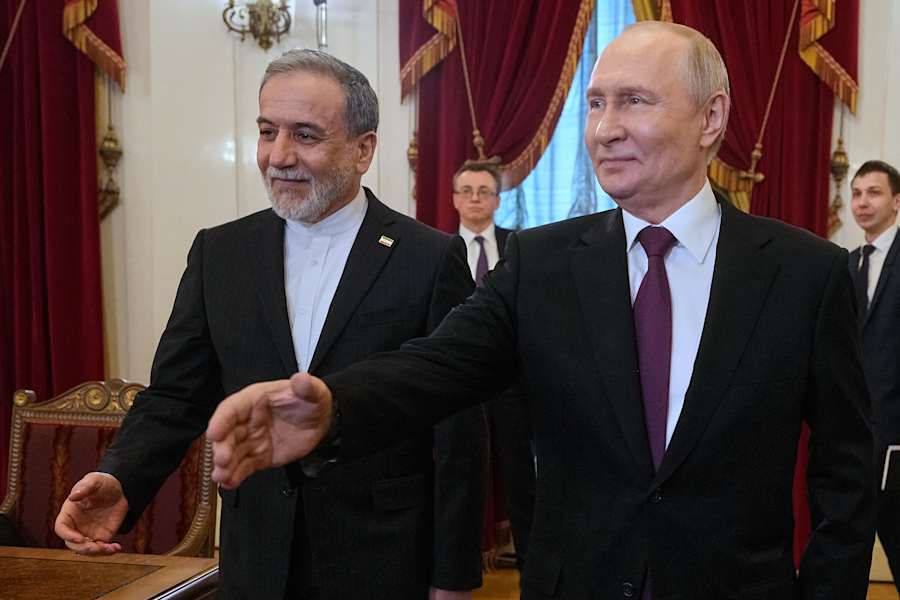
Meanwhile, China and Pakistan have jointly presented a five-point peace plan aimed at bringing about a ceasefire and reopening the Strait of Hormuz. Beijing’s involvement reflects its growing ambition to position itself as a global peacemaker, but it also underscores the extent to which the crisis threatens China’s own economic interests. As the BBC has noted, China’s peacemaking efforts are driven as much by self-interest as by diplomatic altruism — the Hormuz blockade directly endangers the energy supplies that fuel China’s industrial economy.
How the World Is Responding: Europe, Russia, China, and Beyond
The Iran war has exposed and accelerated divergent strategic calculations among the world’s major powers, producing a landscape of responses that range from solidarity to opportunism.
Europe: Crisis as Catalyst
For Europe, the Iran war represents the second major energy crisis in four years, following the disruption of Russian gas supplies after the invasion of Ukraine. As Grégoire Roos discusses in the podcast, the crisis has paradoxically strengthened the case for deeper
European integration on energy and security policy. The EU has moved quickly to coordinate emergency energy measures, and the shock has provided political momentum for structural reforms — such as decoupling gas and electricity prices — that had previously stalled in Brussels.
However, the crisis has also exposed deep divisions within Europe. Southern European nations, more dependent on Gulf energy and more exposed to the inflationary fallout, are pushing for a more conciliatory approach towards Iran, while Northern and Eastern European states, still seared by the experience of Russian energy blackmail, are more inclined to support a firm line. The podcast explores whether the shock of the US-Iran war might actually help Europe come together, or whether it will widen the fissures that have long complicated the project of European integration.
Russia: Opportunistic Calculations
Russia’s response to the Iran war has been characterised by strategic ambiguity. On the one hand, the surge in oil prices has been a windfall for Moscow, providing a significant boost to state revenues at a time when the Russian economy is labouring under the weight of Western sanctions and the ongoing costs of the war in Ukraine. On the other hand, a prolonged conflict that destabilises the broader Middle East could create security risks on Russia’s southern flank and complicate its own carefully calibrated relationships with both Iran and Israel.
The Trump administration’s decision to extend a waiver allowing countries to buy Russian oil, reported by The Guardian, illustrates the perverse incentives at work. In an ironic twist, the Iran war — launched in part by the United States — has provided Russia with an economic lifeline, undermining the very sanctions regime that the West has painstakingly constructed since 2022.
China: Peacemaker with Interests
China’s engagement with the crisis reflects its dual identity as both a rising global power seeking diplomatic influence and the world’s largest oil importer facing an existential threat to its energy security. The five-point peace plan co-presented with Pakistan represents Beijing’s most ambitious diplomatic initiative in the Middle East to date, but its prospects for success remain uncertain. China lacks the military leverage that the United States brings to bear, and its relationships with both Iran and Israel are complicated by competing economic and strategic interests.
The ADB’s research indicates that the conflict could reduce GDP growth in developing Asia by 0.5 to 1.0 percentage points, with China’s own growth outlook revised downward. For Beijing, the crisis reinforces the strategic imperative of reducing dependence on Middle Eastern energy — a goal that has driven heavy investment in renewable energy, domestic production, and alternative supply routes, but that remains far from fully realised.
Gulf States: Navigating the Crossfire
The Gulf states find themselves in an acutely uncomfortable position. Their economies are directly threatened by the conflict’s disruption of shipping routes and energy infrastructure, and their security is jeopardised by the risk of escalation. Yet they also face the delicate diplomatic challenge of maintaining relationships with the United States, their primary security guarantor, while avoiding the appearance of endorsing a war that is deeply unpopular with their own populations. The Gulf Cooperation Council states have pursued a careful balancing act, offering to mediate while quietly increasing their own military readiness and seeking to diversify their export routes away from the Strait of Hormuz.
The Economic Fallout: Inflation, Growth, and the Risk of Recession
The macroeconomic consequences of the Iran war are already substantial, and the podcast panel devotes considerable attention to assessing their likely trajectory. The key question, as David Lubin frames it, is whether the current shock will prove to be a temporary disruption — painful but ultimately absorbable — or the trigger for a more fundamental reassessment of global economic prospects.
Inflation Resurgent
Oil and gas price increases have already pushed inflation higher across the global economy. The Council on Foreign Relations estimates that oil prices have risen by roughly 20 to 30 percent since the conflict began, bringing renewed inflationary pressure to import-dependent economies, particularly in Europe. The IMF has warned that the war is affecting energy trade and finance in ways that could persist well beyond any ceasefire, as the destruction of infrastructure and the reconfiguration of supply routes create lasting cost increases that will be passed through to consumers.
Central banks face an unenviable dilemma. Raising interest rates to combat inflation risks deepening the growth slowdown that the energy shock has already initiated. Keeping rates on hold, however, risks allowing inflationary expectations to become embedded, potentially requiring even more painful tightening later. The Federal Reserve, the European Central Bank, and the Bank of England are all navigating this trade-off in real time, with no consensus on the correct path.
Growth at Risk
The impact on global growth is increasingly clear. The Asian Development Bank projects that the conflict could reduce GDP growth in developing Asia by up to 1 percentage point. The IMF has revised its global growth forecast downward, and the Friends of Europe analysis suggests that the energy crisis alone could cut 1 percent from average GDP growth
worldwide. For economies that were already struggling with the after-effects of the pandemic, the war in Ukraine, and tightening financial conditions, the Iran war represents an additional and unwelcome headwind.
The distributional effects of the slowdown are likely to be highly unequal. Energy-exporting nations, particularly the United States, Norway, and some Gulf states, may benefit from higher prices, at least in the short term. Energy-importing nations, including most of Europe and developing Asia, will bear the brunt of the cost. This divergence could exacerbate global inequalities and deepen the political fractures that the crisis has already exposed.
Region
Primary Impact
GDP Growth Revision
Key Vulnerability
Europe
Energy price surge, LNG shortage
−0.5 to −1.0pp
Dependence on Gulf LNG
China
Supply chain disruption, oil cost
−0.5 to −1.0pp
87% of oil via Hormuz
India
Refinery feedstock crisis
−0.8 to −1.2pp
80% oil import dependence
United States
Mixed: higher domestic prices, export gains
−0.2 to −0.5pp
Strategic military costs
Russia
Oil revenue windfall
+0.3 to +0.5pp
Sanctions evasion limits
Gulf States
Infrastructure risk, shipping disruption
−0.3 to −0.8pp
Direct conflict exposure
Beyond Energy: Supply Chains, Food Security, and the Human Cost
While the energy shock has dominated headlines, the Iran war’s impact extends far beyond oil and gas markets. As the podcast panellists note, the disruption to the Strait of Hormuz affects not only energy cargoes but all commercial shipping through the Persian Gulf, with cascading consequences for global supply chains that are already fragile following years of pandemic-era disruptions and the ongoing fallout from the Ukraine war.
UNCTAD has documented the broader implications for global trade and development, noting that shipping costs have surged as vessels are forced to reroute around the conflict zone, increasing transit times and insurance premiums. The ripples extend to industries far removed from energy: manufacturing supply chains that depend on just-in-time delivery of components from Asia to Europe and North America are experiencing delays and cost increases that feed through into consumer prices.
Food security is another critical concern. Several countries in the Middle East and East Africa depend on wheat and other food imports that transit through the Persian Gulf. Disruptions to these shipments, combined with the inflationary impact of higher energy costs on agricultural production and transport, could exacerbate food insecurity in some of the world’s most vulnerable populations. The Food and Agriculture Organization has warned that a prolonged closure of the Strait could push millions more into food insecurity, particularly in countries like Yemen, Sudan, and Somalia, where humanitarian conditions were already dire.
The human cost of the conflict itself must not be overlooked. Thousands of civilians have been displaced in Iran and neighbouring Gulf states, and the deployment of thousands of additional US troops to the Middle East has raised fears of a broader regional conflagration. The refugee flows, infrastructure destruction, and psychological trauma associated with the war will persist long after any ceasefire is declared, adding a humanitarian dimension to what is often discussed primarily in economic and strategic terms.
What Comes Next: Three Scenarios for the Global Order
The trajectory of the Iran war remains profoundly uncertain, and the podcast panel is careful not to offer predictions where evidence is insufficient. Nevertheless, the broad outlines of three possible scenarios can be discerned, each with very different implications for the global economy and political system.
Scenario 1: Contained Conflict and Gradual Normalisation
Under this scenario, a ceasefire is reached within the coming weeks or months, the Strait of Hormuz is gradually reopened to commercial traffic, and oil prices retreat from their peaks. The global economy absorbs the shock without tipping into recession, though growth is slower and inflation remains elevated for a period. This outcome assumes that diplomatic efforts — led by China, Pakistan, and European intermediaries — succeed in bridging the gap between Washington and Tehran, and that neither side has an incentive to escalate further. It also assumes that the damage to regional infrastructure is limited enough to allow a relatively rapid restoration of energy flows.
Scenario 2: Prolonged Stalemate and Structural Disruption
In this scenario, the conflict settles into a protracted stalemate characterised by intermittent military exchanges, a partial and unreliable reopening of the Strait, and persistent uncertainty about the future of energy supplies from the Gulf. Oil prices remain elevated, inflation becomes more deeply embedded, and global growth suffers a more significant and lasting hit. This is arguably the most likely scenario, given the current state of diplomatic play: the incentives for both sides to continue fighting are strong, and the gaps in their respective positions are wide. Under this outcome, the world would face a period of sustained economic headwinds and geopolitical instability, with the 1973 comparison
becoming increasingly apt.
Scenario 3: Escalation and Systemic Crisis
The worst-case scenario involves escalation beyond the current scope of the conflict — whether through direct Iranian attacks on US or Israeli assets that trigger a more intensive military response, through the conflict spilling over into neighbouring countries, or through the complete and prolonged closure of the Strait of Hormuz. Under this scenario, oil prices could surge well beyond $150 per barrel, global recession becomes likely, and the crisis transforms from a regional shock into a genuine systemic crisis of the kind that the podcast title invites us to contemplate. The geopolitical consequences would be far-reaching, potentially realigning alliances, accelerating the fragmentation of the global economic system, and undermining the rules-based international order in ways that would be difficult to reverse.
Conclusion: Regional Shock or Global Crisis — The Answer Depends on What Happens Next
The Independent Thinking podcast from Chatham House provides an essential framework for understanding the Iran war and its implications, but it also makes clear that the answer to the question — regional shock or global crisis? — depends critically on decisions that have not yet been made and events that have not yet unfolded. The world stands at an inflection point. The mechanisms of the global economy have proven more resilient than many feared, but they are being tested in ways not seen for fifty years.
What is already evident is that the crisis has exposed the fragility of global energy supply chains, the limits of diplomatic leverage in a multipolar world, and the interconnectedness of economic and security risks in an era of great-power competition. Whether these vulnerabilities lead to a fundamental restructuring of the international system, or whether they are managed through incremental adaptation and crisis diplomacy, will depend on the choices made by leaders in Washington, Tehran, Beijing, Brussels, and Moscow in the weeks and months ahead.
As David Lubin and Grégoire Roos make clear in their analysis, the costs of getting this wrong are enormous. The 1973 oil shock reshaped the global economy for a generation. The 2026 Iran war has the potential to do the same — or, with wise leadership and a measure of luck, to be remembered as the crisis that the world managed to navigate without breaking. The stakes could not be higher, and the margin for error could not be thinner.
About This Post
This blog post is based on the Independent Thinking podcast episode “Iran War: Regional Shock or Global Crisis?” produced by Chatham House. The podcast features David Lubin,
senior research fellow in the Global Economy and Finance Programme, and Grégoire Roos, director of the Europe and Russia and Eurasia programmes, in conversation with host Bronwen Maddix, director of Chatham House. Independent Thinking is a weekly international affairs podcast providing insight on the latest international issues through conversations with leading policymakers, journalists, and Chatham House experts.
Additional data and analysis have been drawn from the IMF, UNCTAD, the Asian Development Bank, the Council on Foreign Relations, the London School of Economics, Goldman Sachs Research, and other authoritative sources as cited throughout the text.